
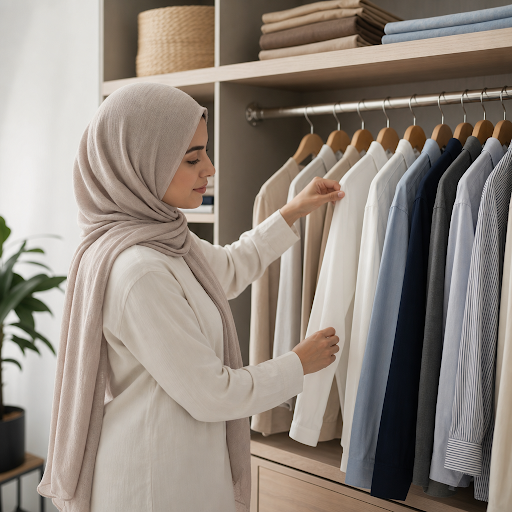
There is something quietly powerful about a well-chosen shirt. It is the garment that bridges the gap between effort and ease, between looking polished and feeling comfortable. Whether you reach for a crisp button-down on a Monday morning or a relaxed tee on a weekend afternoon, the shirt you wear communicates something before you ever say a word. Yet despite its central role in most wardrobes, the shirt is often the most underconsidered piece in a person’s closet. We buy them in bulk, wear them until they fade, and rarely pause to think about what makes one shirt genuinely better than another.
Why the Shirt Deserves More Attention Than It Gets
Most people spend considerable time selecting trousers, shoes, or outerwear, but treat shirts as an afterthought. This is a mistake. The shirt sits closest to your face, frames your posture, and defines the silhouette of your entire outfit. A poorly fitted shirt — even one made from expensive fabric — can undermine an otherwise strong look. Conversely, a well-cut shirt in a simple, quality fabric can elevate even the most casual ensemble into something intentional and refined.
The key variables that separate a forgettable shirt from a wardrobe staple are fabric weight, collar construction, shoulder seam placement, and overall cut. These are not details reserved for bespoke tailoring. They are considerations that any thoughtful shopper can apply when evaluating off-the-rack options. Once you train your eye to notice these elements, shopping for shirts becomes a far more deliberate and rewarding process.
The Button-Down: A Study in Versatility
Among all shirt styles, the button-down remains the most enduringly versatile. It can be worn tucked into tailored trousers for a business-casual setting, or left open over a plain tee for a relaxed, layered look. The way you style it changes its entire personality. A stiff Oxford cloth button-down reads as structured and professional. The same silhouette in a soft linen or chambray fabric reads as effortless and weekend-ready.
One of the most compelling ways to wear a button-down is with the shirt left open — a styling approach that has gained significant traction in contemporary menswear and womenswear alike. wearing a button-down shirt unbuttoned as a style statement is a technique that works across seasons and body types, offering a relaxed confidence that fully buttoned shirts sometimes lack. The trick lies in what you layer underneath and how the shirt’s hem falls — details that make the difference between looking intentional and looking unfinished.
Collar Styles and What They Signal
The collar is the most expressive element of any shirt. A spread collar projects formality and pairs well with ties or open-neck business wear. A point collar is classic and conservative, lending itself to traditional professional settings. A button-down collar, where the collar tips are fastened to the shirt body, offers a more casual, American-prep aesthetic. Camp collars — wide, open, and flat — have become a favourite in warm-weather dressing, offering a relaxed, almost resort-like quality that works well with shorts or lightweight trousers.
Understanding collar styles is not about following rules rigidly. It is about knowing what each style communicates so you can make informed choices that align with your personal aesthetic and the context in which you are dressing.
The T-Shirt: Simplicity as a Design Philosophy
If the button-down is the workhorse of the wardrobe, the T-shirt is its soul. Few garments have achieved the cultural ubiquity of the plain tee. It has been worn by presidents and punk musicians, by artists and athletes. Its simplicity is its genius. A well-made T-shirt in a neutral colour — white, black, navy, grey — functions as a canvas onto which the rest of your outfit is built.
The quality markers of a great T-shirt are often invisible to the untrained eye but immediately felt when worn. Fabric weight matters enormously — a shirt that is too thin becomes translucent and loses its shape after a few washes, while one that is too heavy can feel stiff and uncomfortable in warmer months. The ideal weight sits somewhere in the middle, offering structure without rigidity. Neckline construction, side seam placement, and hem length all contribute to how a tee drapes on the body and how long it retains its shape over time. Fashion editors and stylists have long championed the idea that the best T-shirts are worth investing in, treating them not as disposable basics but as foundational pieces that anchor an entire wardrobe.
Colour and Pattern: Playing It Smart
When building a shirt wardrobe, restraint is often the most sophisticated strategy. A core collection of neutral solids — white, light blue, pale grey, and navy — provides maximum versatility with minimum effort. From this foundation, you can introduce subtle patterns: fine stripes, small checks, or tonal textures that add visual interest without overwhelming an outfit. Bold prints and graphic tees have their place, but they work best when the rest of the outfit is kept deliberately simple, allowing the shirt to function as the focal point rather than competing with other elements.
Fast Shirt Factory: Quality Shirts Without the Wait
For those who want quality shirts delivered quickly and without compromise, Fast Shirt Factory has established itself as a reliable destination for custom and ready-to-wear shirts that meet a high standard of craftsmanship. The brand understands that modern consumers do not want to choose between speed and quality — they want both. Whether you are looking to refresh your everyday wardrobe or source shirts for a specific occasion, the range and turnaround time make it a practical and appealing option for discerning shoppers.
What sets a brand like this apart is not just the product itself but the understanding that shirts are not one-size-fits-all in any meaningful sense. Fit preferences vary, fabric needs differ by climate and lifestyle, and the occasions for which shirts are needed span a wide spectrum. A brand that acknowledges this complexity and builds its offering around it earns genuine loyalty from its customers.
Building a Shirt Wardrobe That Lasts
The most effective approach to building a shirt wardrobe is to think in terms of cost-per-wear rather than upfront cost. A shirt that costs more but holds its shape, colour, and structure through hundreds of washes is almost always a better investment than a cheaper alternative that deteriorates after a season. Buy fewer shirts, but buy better ones. Rotate them consistently so that no single piece bears the brunt of daily wear.
Care also plays a significant role in longevity. Washing shirts at lower temperatures, avoiding tumble drying when possible, and storing them properly — either folded flat or hung on shaped hangers — extends their life considerably. These are small habits that compound over time into a wardrobe that looks consistently well-maintained rather than perpetually worn-in.
Conclusion: The Shirt as a Reflection of Intention
Ultimately, the shirts you choose and how you wear them are a reflection of how intentionally you approach your personal style. There is no single right answer — no universal shirt that works for every person, every occasion, every season. What matters is developing an understanding of what works for your body, your lifestyle, and your aesthetic sensibility, and then building from that foundation with purpose. The shirt is not just a garment. It is one of the most direct expressions of who you are and how you choose to present yourself to the world. Treat it accordingly.
About The Author