Skip to content
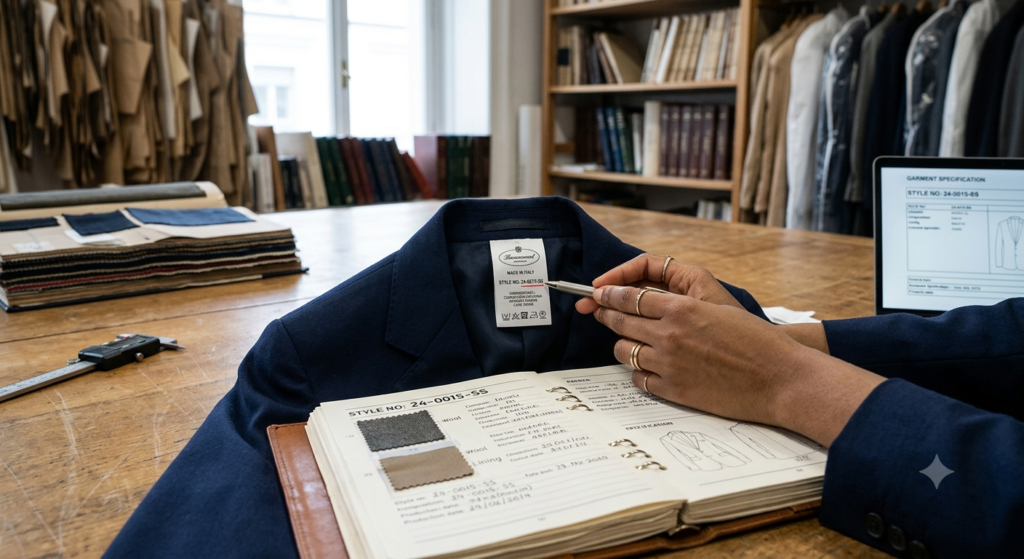
What Is a Style Number in Fashion If you’ve ever shopped online, browsed a clothing catalog, or worked in retail, you’ve probably come across a random-looking code on a tag or product listing. That code has a name — it’s called a style number, and it plays a bigger role in fashion than most people realize.
Whether you’re a shopper trying to track down a specific item, a retailer managing inventory, or a designer building a collection, understanding style numbers can save you a lot of time and confusion.
What Is a Style Number in Fashion?
A style number (also called a style code or style #) is a unique identifier assigned to a specific clothing or accessory design. It’s essentially the product’s fingerprint — no two styles share the same number within a brand’s catalog.
Unlike a barcode or SKU (Stock Keeping Unit), which tracks specific variations like size and color, a style number refers to the design itself. So a single style number might cover a dress available in five colors and four sizes, but every variation of that dress shares the same style number because they all belong to the same design.
Think of it this way: the style number identifies what the product is, while the SKU identifies exactly which version of that product you’re looking at.
Why Do Fashion Brands Use Style Numbers?
The fashion industry moves fast. A mid-size brand might carry thousands of products across multiple seasons. Without a standardized system to track designs, operations would quickly become chaotic. Style numbers solve that problem.
Here’s what they’re used for in practice:
Inventory management is the most obvious use. Warehouses, stockrooms, and distribution centers use style numbers to organize and locate products quickly. When a store needs to reorder a jacket that’s been selling well, they reference the style number to make sure they’re getting the exact same design — not something similar.
Production and sourcing also rely heavily on style numbers. When a brand communicates with manufacturers, fabric suppliers, or overseas factories, they use style numbers to make sure every party is talking about the exact same garment. Miscommunication at this stage can lead to expensive mistakes.
Wholesale and B2B ordering is another key area. When buyers place orders at trade shows or through lookbooks, they use style numbers to specify their selections. It removes any ambiguity from the process.
Customer service teams use style numbers to quickly pull up product details, check availability, or assist with returns and exchanges — without needing to describe an item by its appearance.
What Does a Style Number Look Like?
Style numbers vary widely between brands. There’s no universal format, so each company develops its own system based on their needs. That said, you’ll usually see a combination of letters and numbers — sometimes a short code, sometimes a longer alphanumeric string.
For example:
- A fast-fashion brand might use something simple like BL2047 (where “BL” could indicate “blouse” and the numbers are sequential)
- A luxury brand might use a more complex internal code like FW24-KNT-019 (possibly indicating fall/winter 2024, knitwear category, design #19)
- A denim brand might encode the fit and rise into the style number
Some brands keep their system completely internal and opaque, while others build logic into their codes that makes them easier to decode.
Style Number vs. SKU: What’s the Difference?
This is one of the most common points of confusion in fashion retail, so it’s worth breaking down clearly.
A style number identifies the design. A SKU (Stock Keeping Unit) identifies a specific sellable unit — meaning it accounts for all the variations like color and size.
Here’s a simple example: Imagine a linen shirt that comes in white, blue, and green, in sizes XS through XL. That shirt has one style number. But it has 15 SKUs — one for each combination of color and size.
In practice, the SKU is often built from the style number, with additional codes appended to specify color and size. So the white shirt in size medium might have a SKU like LS1042-WHT-M.
How to Find a Style Number
If you’re a shopper trying to locate a specific item, here’s where to look:
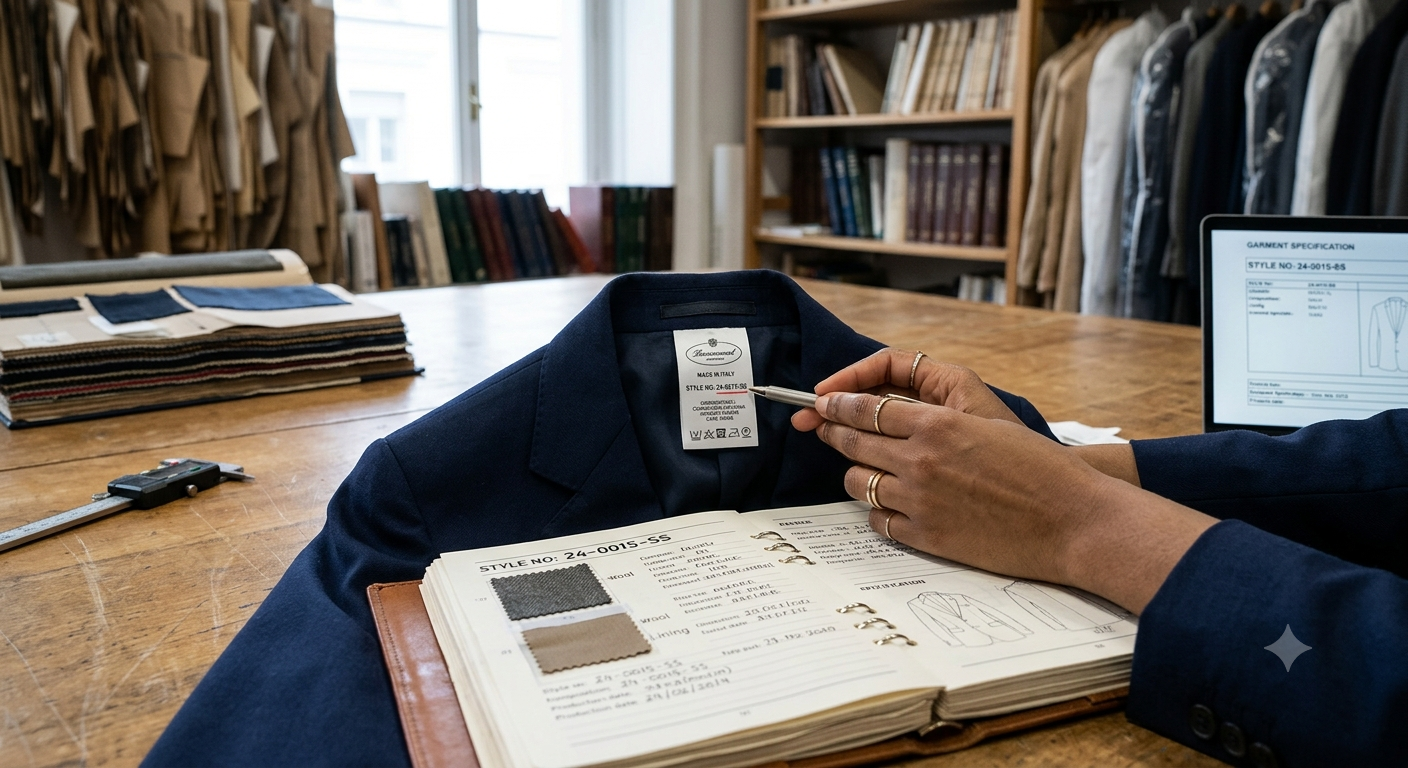
On the garment tag — Most clothing has a care label or brand tag on the inside with a style number printed or sewn in. It’s often labeled “Style #,” “Style No.,” or just listed as a string of characters alongside the size.
On the product page — Online retailers often list the style number in the product details section, sometimes labeled as “style,” “item number,” or “product code.”
On the receipt or order confirmation — Style numbers frequently appear on purchase receipts and order summaries, especially from specialty or department stores.
By contacting the brand — If you’re searching for a sold-out item or trying to find a product from a past season, reaching out to the brand’s customer service with any details you have (color, approximate purchase date, price) may help them locate the style number for you.
Style Numbers and Fashion Resale
Style numbers have become increasingly important in the secondhand and resale market. Platforms like Grailed, Poshmark, TheRealReal, and Depop have large communities of buyers who use style numbers to verify authenticity and confirm the exact product they’re buying.
For high-value items — vintage pieces, designer garments, limited releases — a confirmed style number can make the difference between a quick sale and a listing that sits for months. Sellers who include accurate style numbers tend to build more trust with buyers, especially in niche fashion communities where details matter enormously.
Authenticators also rely on style numbers when verifying luxury goods. If the style number on a tag doesn’t match what was actually produced by the brand in that season, it’s a red flag.
Style Numbers in the Design Process
From a designer’s perspective, the style number is assigned early in the product development process — often when the design moves from concept sketch to a tech pack (the technical document that guides production). Once assigned, that number follows the garment through every stage: sampling, costing, production, and finally, retail.
This is why style numbers feel so fundamental to the industry. They’re not an afterthought added at the shipping stage — they’re baked into the entire lifecycle of a fashion product from the very beginning.
Final Thoughts
A style number might seem like a small administrative detail, but it’s actually one of the most important organizational tools in the fashion industry. It connects designers, manufacturers, retailers, and customers to the same product — clearly and without confusion.
Whether you’re shopping for a specific item, managing a store, or building your own clothing line, understanding what a style number is and how it works gives you a real advantage. It’s the kind of behind-the-scenes knowledge that makes navigating fashion — at any level — a whole lot easier.
About The Author